Hand Rehabilitation
Product Designer / UX Researcher
Internship Project at PHILIPS
07.2018 - 10.2018
I interned on the in-house design team at Philips in 2018. While Philips already provides rehab training service for stroke patients in the hospital, it would like to extend the aftercare service. My first project at Philips was to design the most frequently-requested features of the rehab system — enabling post-stroke patients to use the device to do hand rehabilitation exercises at home.
Introduction
When I joined, Philips provides EfficiaSR80 S Intelligent Rehab System on device Yangtze1.0, which is used by rehab clinicians to guide the post-stroke upper limb motor rehabilitation training in the hospital environment. However, it doesn’t meet the requirement from the patients at the last stage of the therapy process. Therefore, the new feature of new system includes:
- Assess patient motion capability.
- Generate training plan which made by therapists remotely.
- Facilitate patients do rehab exercises themselves at home by following the gamification training plan.
- Send real-time feedback to the therapist and the physician.
Research and Findings
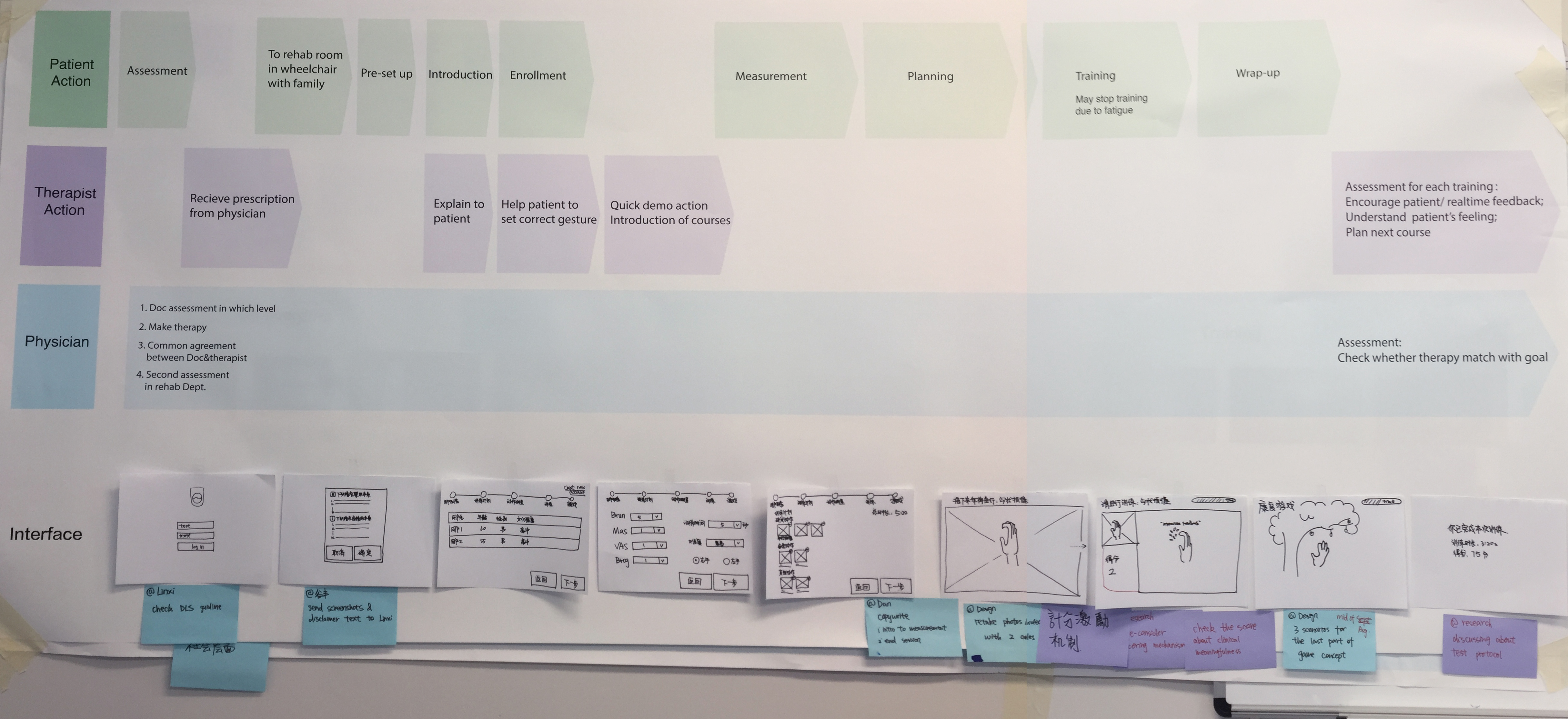
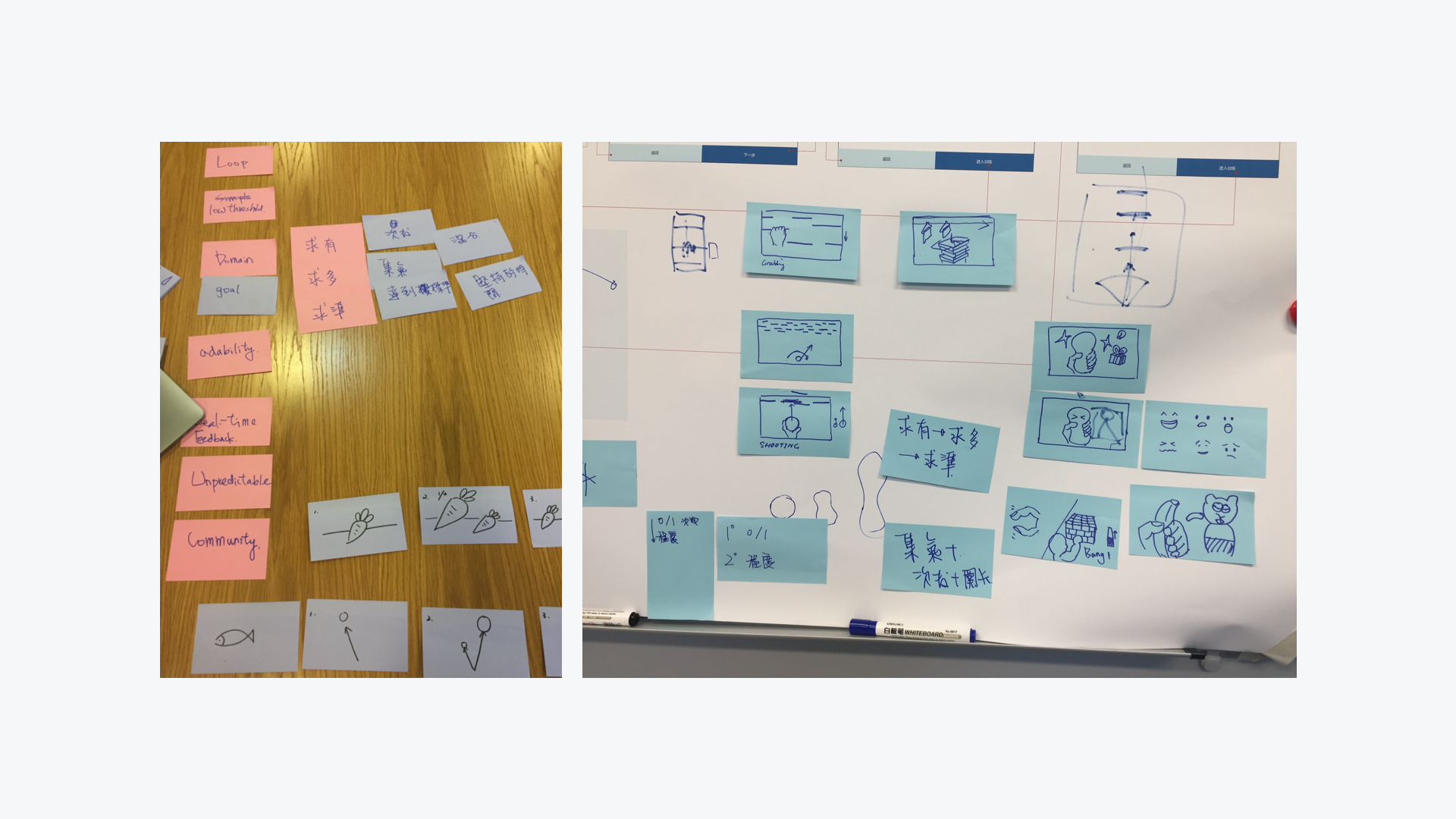
I spent the first two weeks understanding Yangtze1.0 in the hospital and organised the workshop to understand how to help patients get the most efficient therapy, collecting inspiration, and brainstorming ideas with the team.
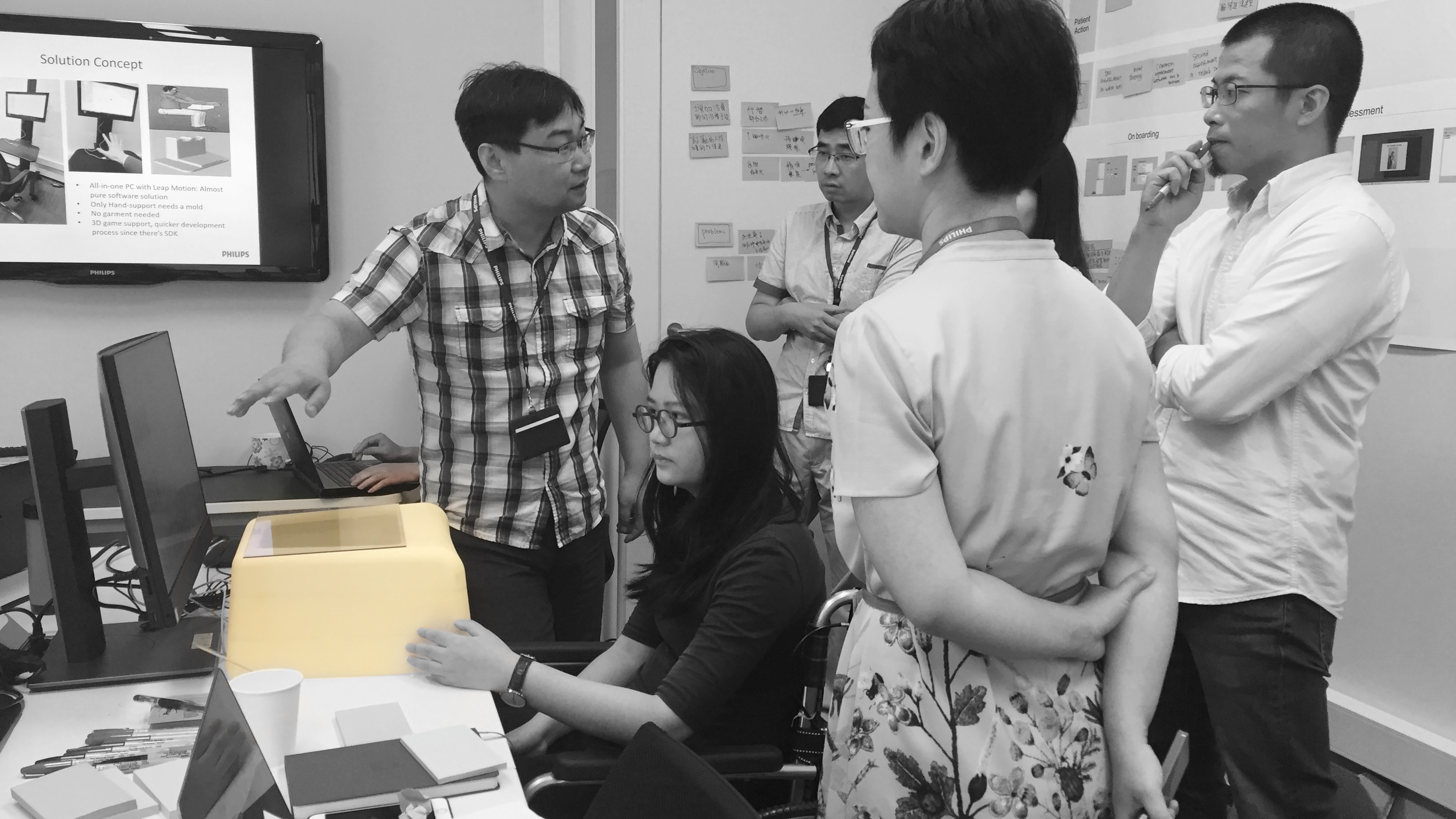
Research workshop with therapist and our scientist, surrounding with the device prototype.
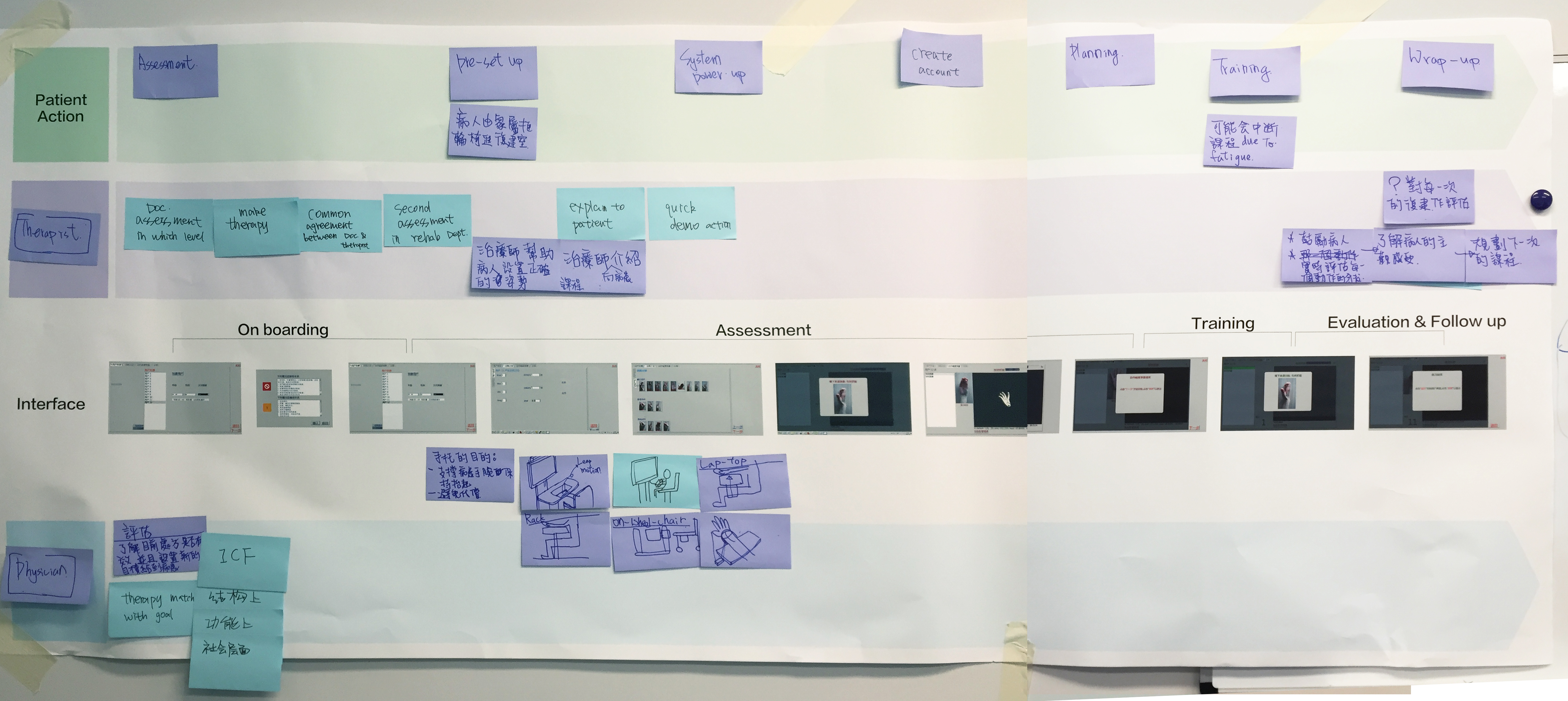
UX Journey was generated on the workshop.
Key findings
- Mismatching stages and scenario:
- Difficulty of insisting to go to hospital every week.
- The pain and boring during rehab.
- High price to rehab at hospital.
- Huge hand rehab device.
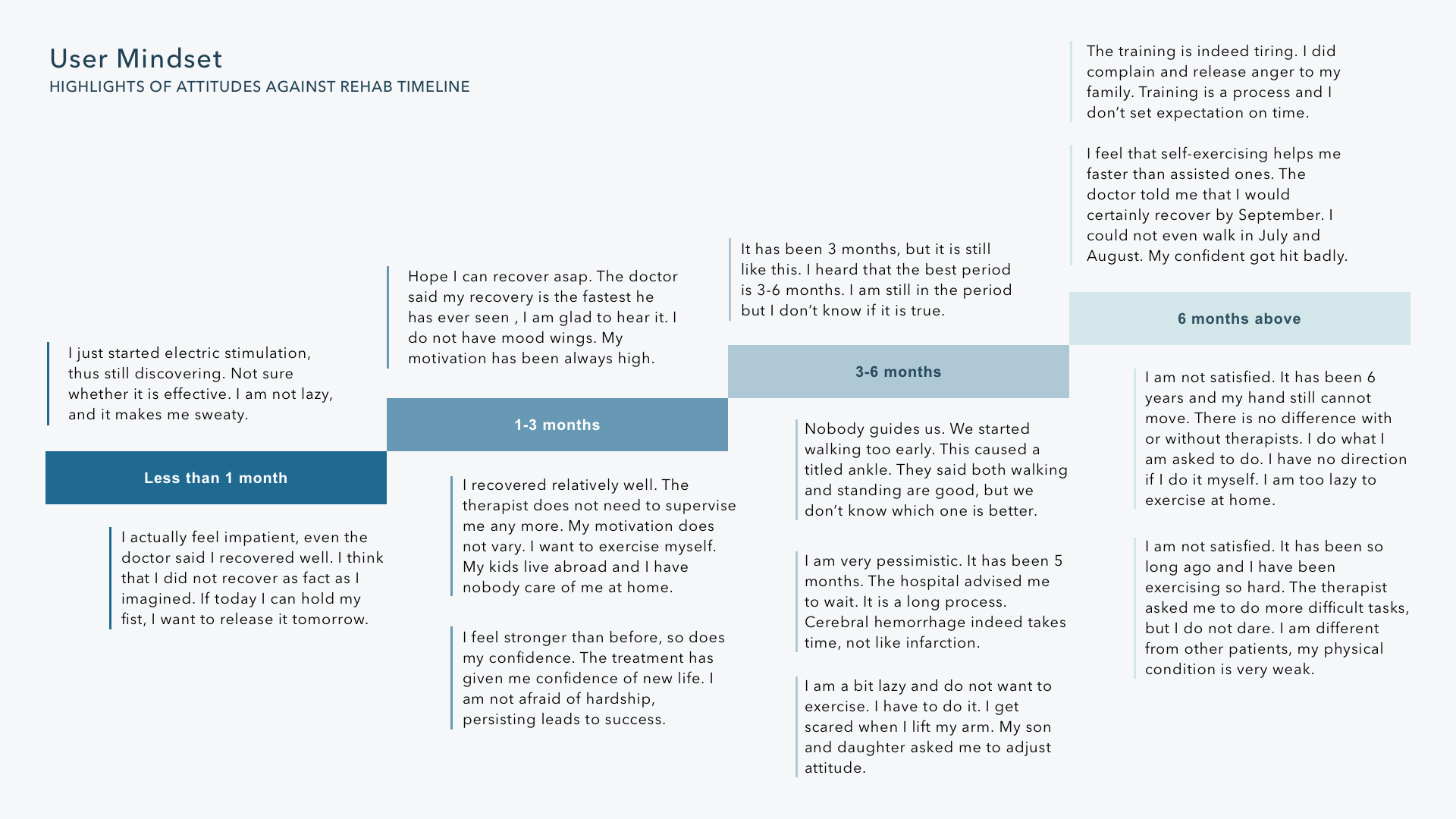
Design Requirements Prioritised:
- Increase the therapy methods, and replace some of the therapist’s work.
- Encouraging patients to finish their rehabilitation process.
- Hospital digitalisation: therapists could get real-time positive/objective feedback.
Opportunities:
- Exercise at home, for patient in phase 4-5.
- Precision rehabilitation.
- Customised objective.
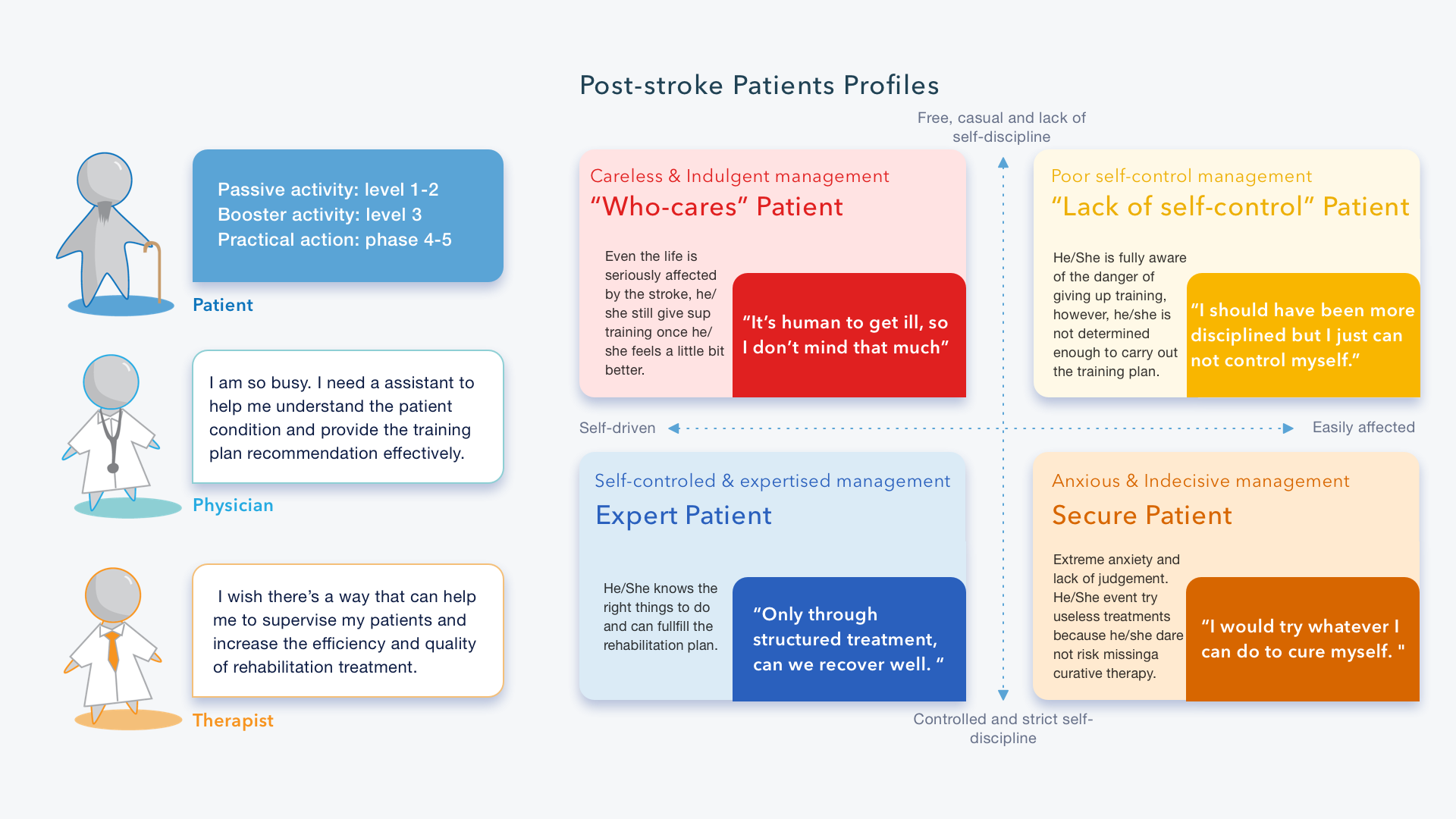
Design Challenge 1: How to design the structured training for Expert Patient and Secure Patient?
Based on the persona I made, the Expert Patient and Secure Patient need structured, professional and authoritative solution. Therefore, the design principles are:
- Focus
For post-stroke patients, they have difficulty to understand complex information. - Professional but understandable guide
For Expert Patient, structured treatment is key to build trust on the system. - Real-time Feedback
Patient want to know the training effect in real time, in order to make it under control. Especially for Secure Patient, who is easily affected, it could enhance their sense of accomplishment. - Accessibility
Unlike Yangtze1.0, which is operated by professional therapist, new system should be used by anyone, even in the extreme situation, it should be used by user himself.
Prototyping
Quickly sketched the UI on a workshop
After workshopping with stakeholders, including therapist, Physicians and scientist researchers, I continued by sketching out some of the most promising ideas to distill ideas down and also to get feedback from the team. This phase was pretty short and I transitioned to digital mocks once I figured out the major directions.
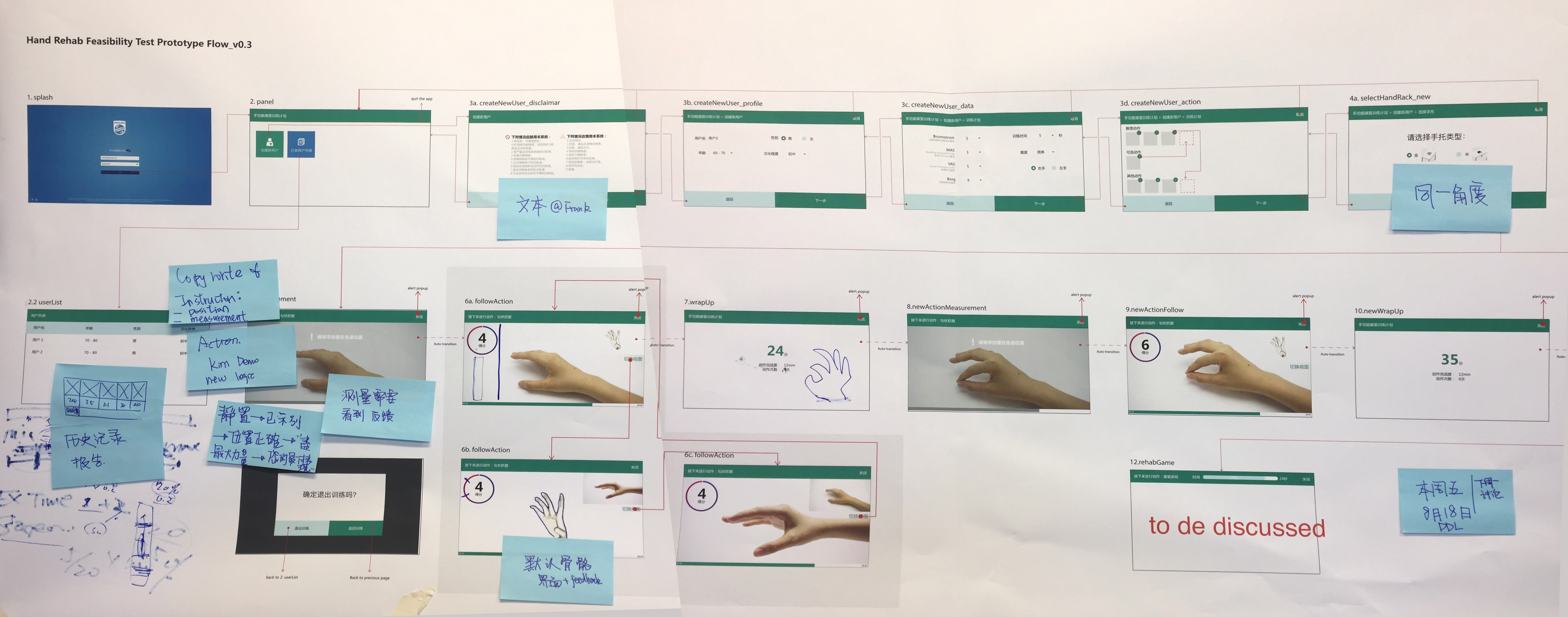
The lo-fi prototype was designed for feasibility test. It was implemented on the devices’ prototype, and was tested with patients in the hospital.
Evaluation: What’s the problem here?
- How to send reminder to adjust gesture?
- How to immersive users to the experience and improve adherence?
- What if more than 1 users use 1 device?
- Is it possible to ask for a helper for patients at the first time onboarding, such as creating account?
- …
Iteration Improvement:
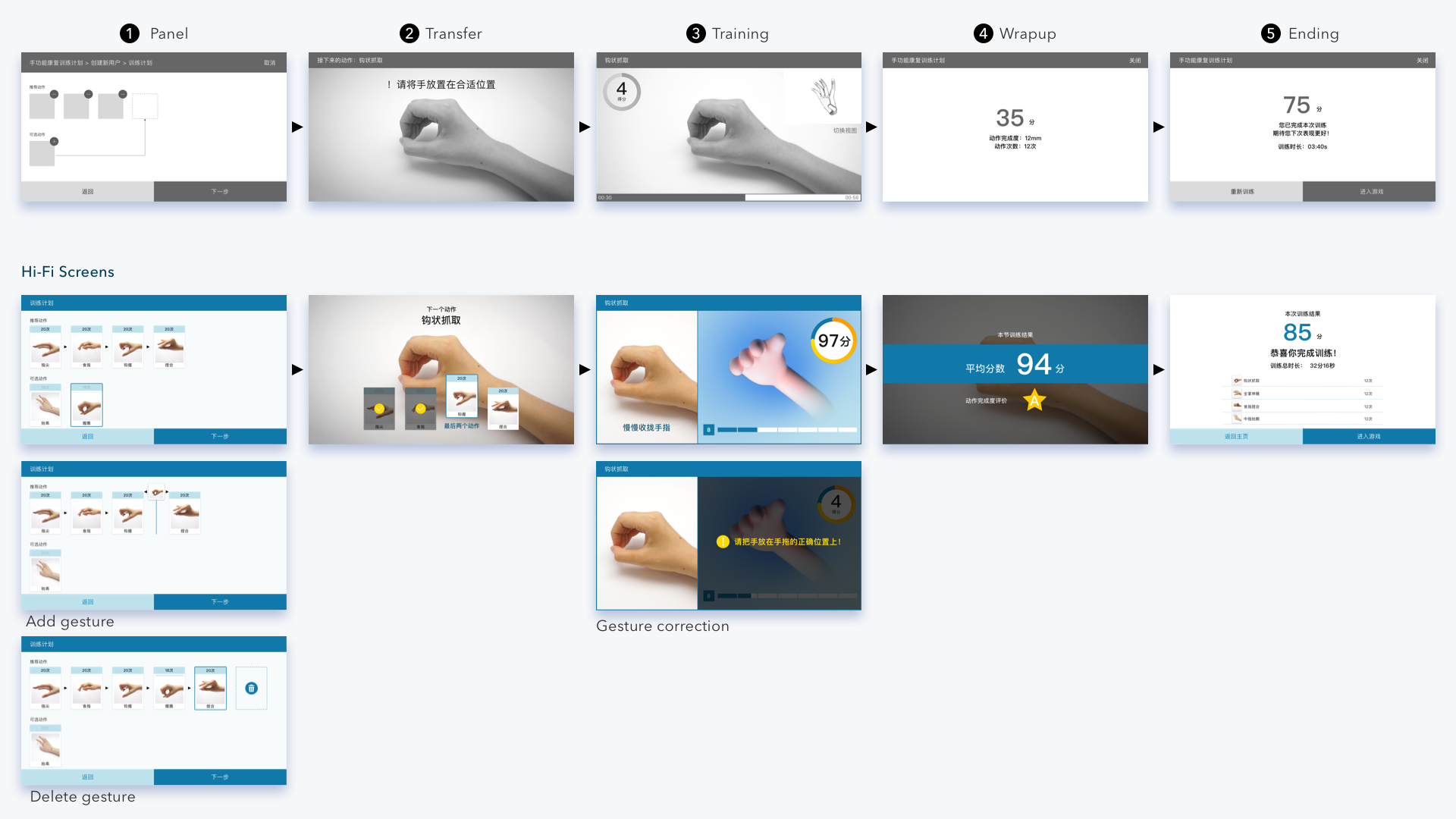
Visualisation of the training effect.
Score
- Change the 10-point scale to 100-point scale, which improves the accuracy and enhance the sense of accomplishment
- The score was popped up everytime when finished an action. In Mid-Fi version, the score was showed on the bottom all the time.
Time counting: from streamline to number of times. It emphasised the accuracy of each action.
Guidance: In the Mid-fi version, the size difference between the training guidance and the 3D modelling hand is large, so it is necessary to switch views. In the Hi-fi version, the guidance video is on the left side and the right side is the real-time action simulation. Users can be clearly corrected without switching views. There are also detailed and professional instructions in the video, supplemented by audio.
Transfer and Wrap-up
Design Challenge 2: How to design the gamification training for Who-cares Patient and Lack of self-control Patient?
For Who-cares Patient and Lack of self-control Patient, our strategy is attracting them rather than pushing them.
Besides, less steps could lower the barrier of using the device.
sketch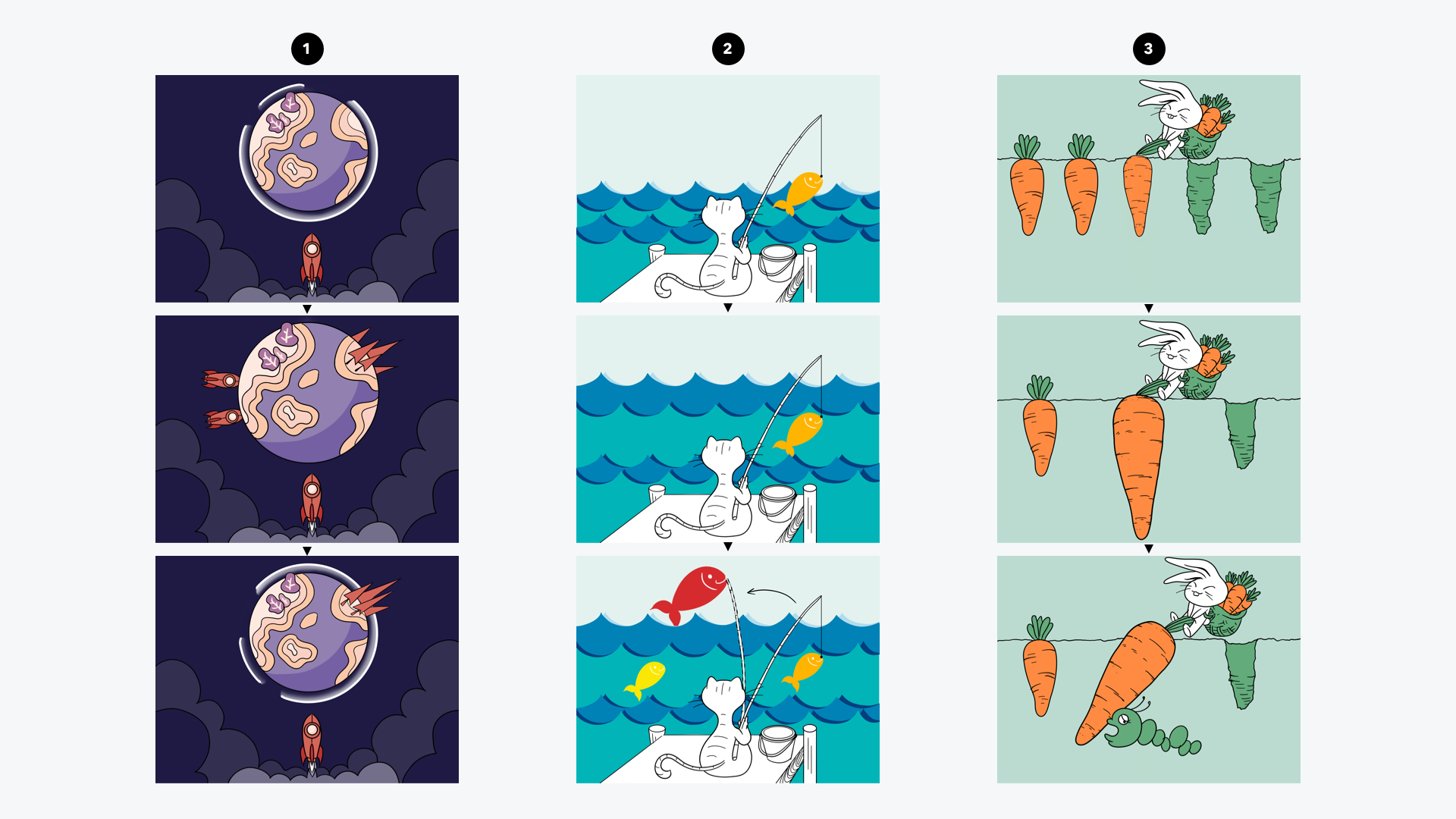
prototype1.0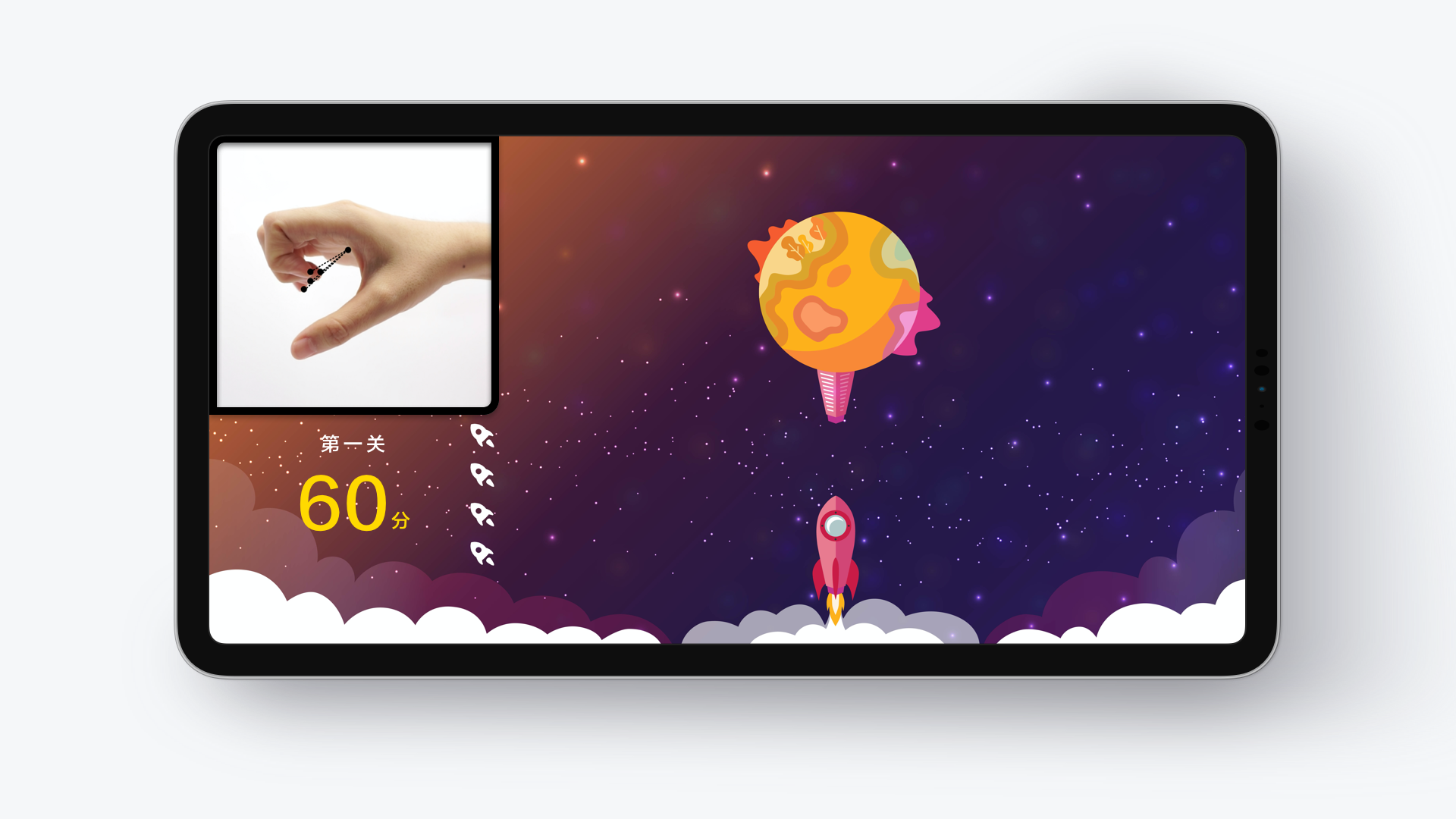
prototype2.0